The Disease
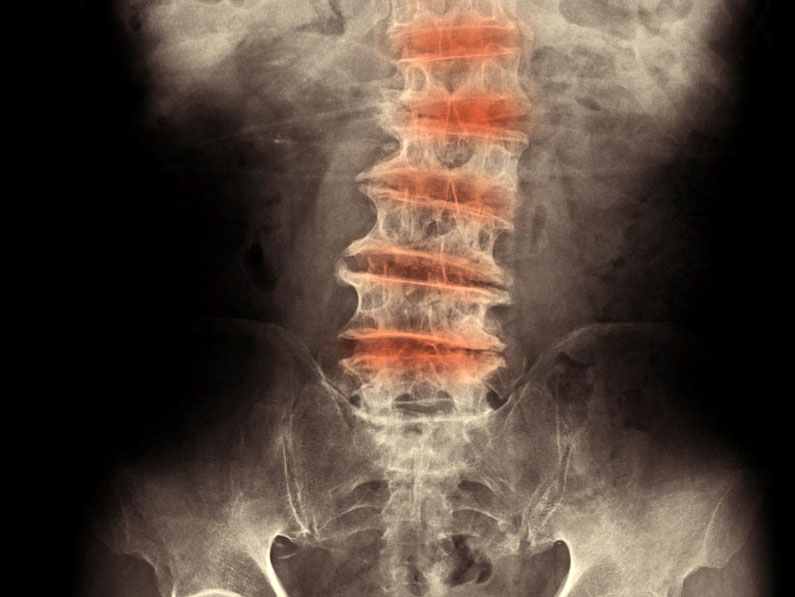
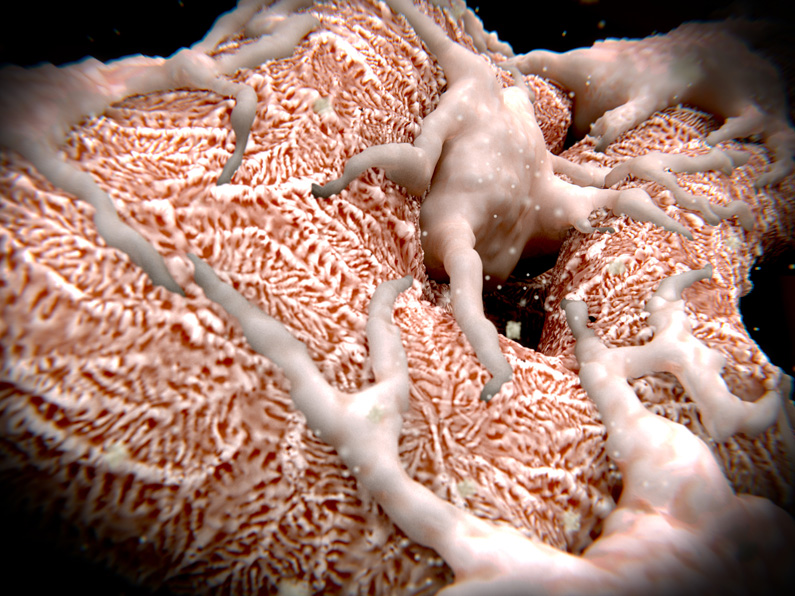
Every organ system, including the lungs, heart, kidney, and liver, can be affected by fibrosis, a pathologic condition characterized by excessive accumulation of connective tissue components and loss of organ functional characteristics, leading frequently to high morbidity and mortality.
Our Preclinical Testing Tools
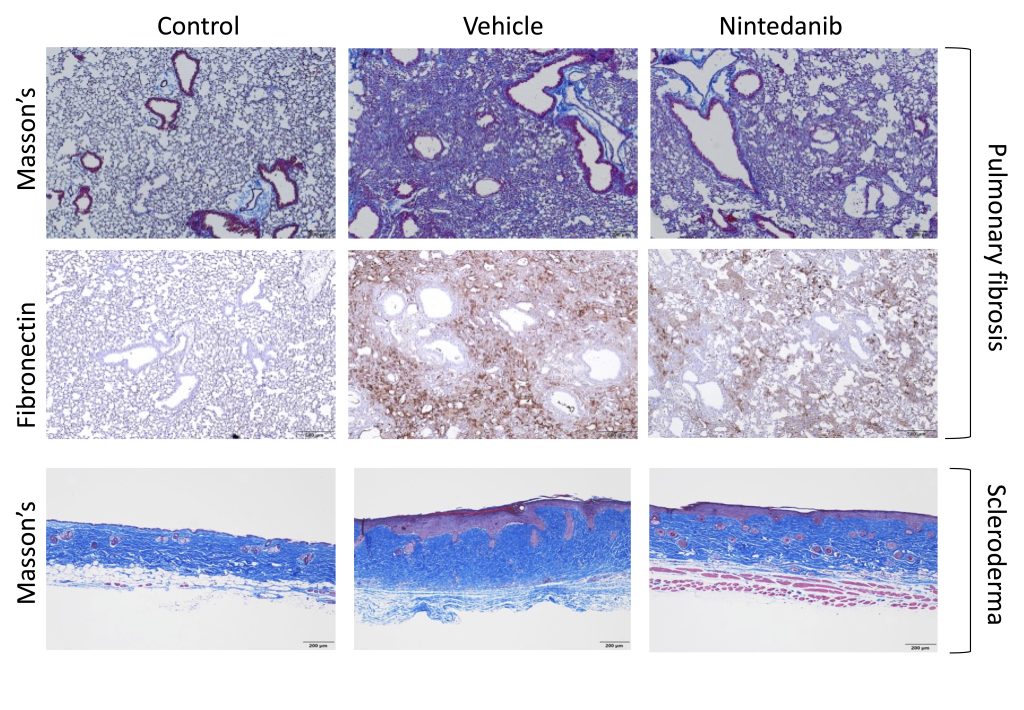
The bleomycin induced pulmonary fibrosis is a reliable preclinical tool standardized and validated in C57BL/6 mice.
Scleroderma pathology features are successfully reproduced in an osmotic mini pump bleomycin release mouse model.
Read-Out Parameters
Body weight changes as indicators of successful pathology induction
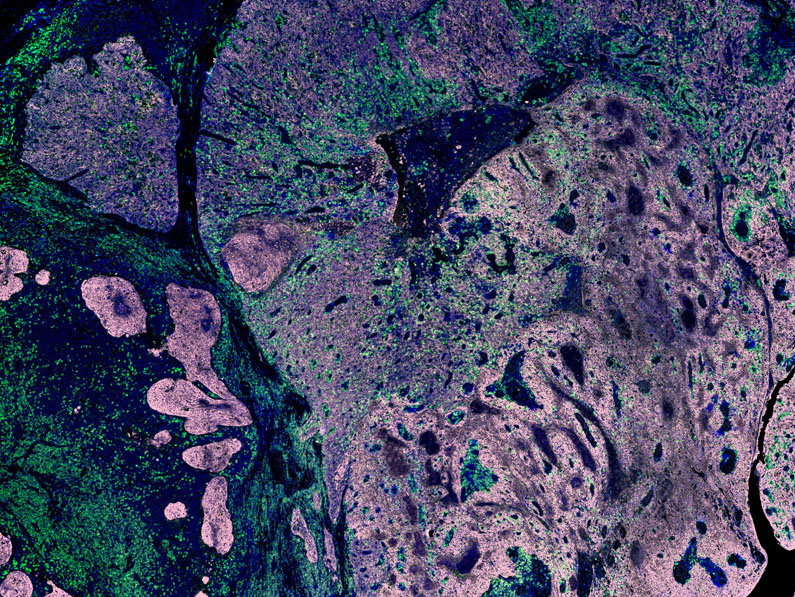
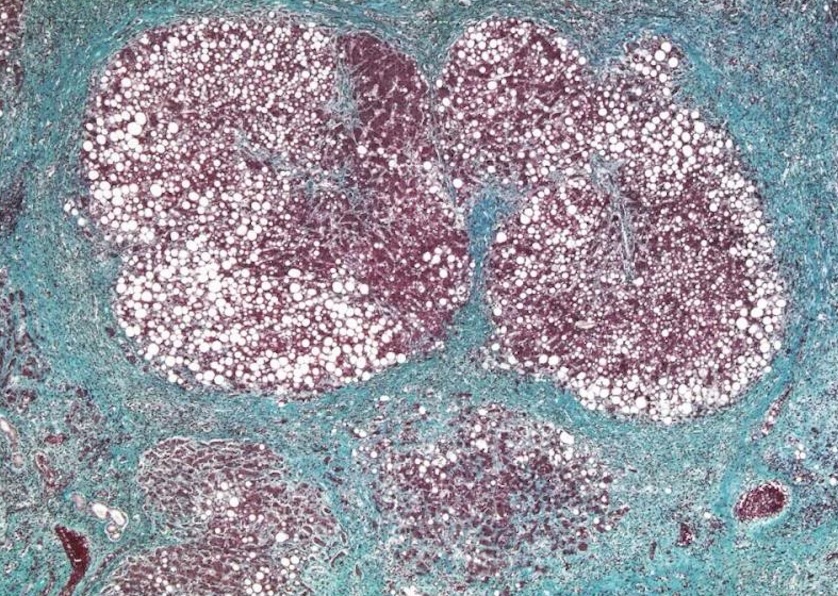
Histopathological evaluation of H&E and Masson’s trichromy stained tissue sections
SP-D protein serum levels as pulmonary fibrosis biomarker
Bronchoalveolar lavage cytokine/chemokine or haematological analysis
Fibronectin, Col1a1 and αSma tissue expression levels as fibrosis markers
Validated platform
Intratracheal instillation of bleomycin induces inflammatory and fibrotic lung pathology. No efficient treatment of fibrosis is available, nintedanib allows amelioration of it.
Subcutaneous implantation of a mini osmotic pump releasing bleomycin induces a systemic pathology with scleroderma skin phenotypes. No efficient treatment of fibrosis is available, nintedanib allows partial amelioration of it.
Competitive Advantage
Pulmonary fibrosis and scleroderma standardized preclinical platforms in combination to our unceasing interest for the development of anti fibrotic treatments support efficiently anti fibrotic drug development projects.