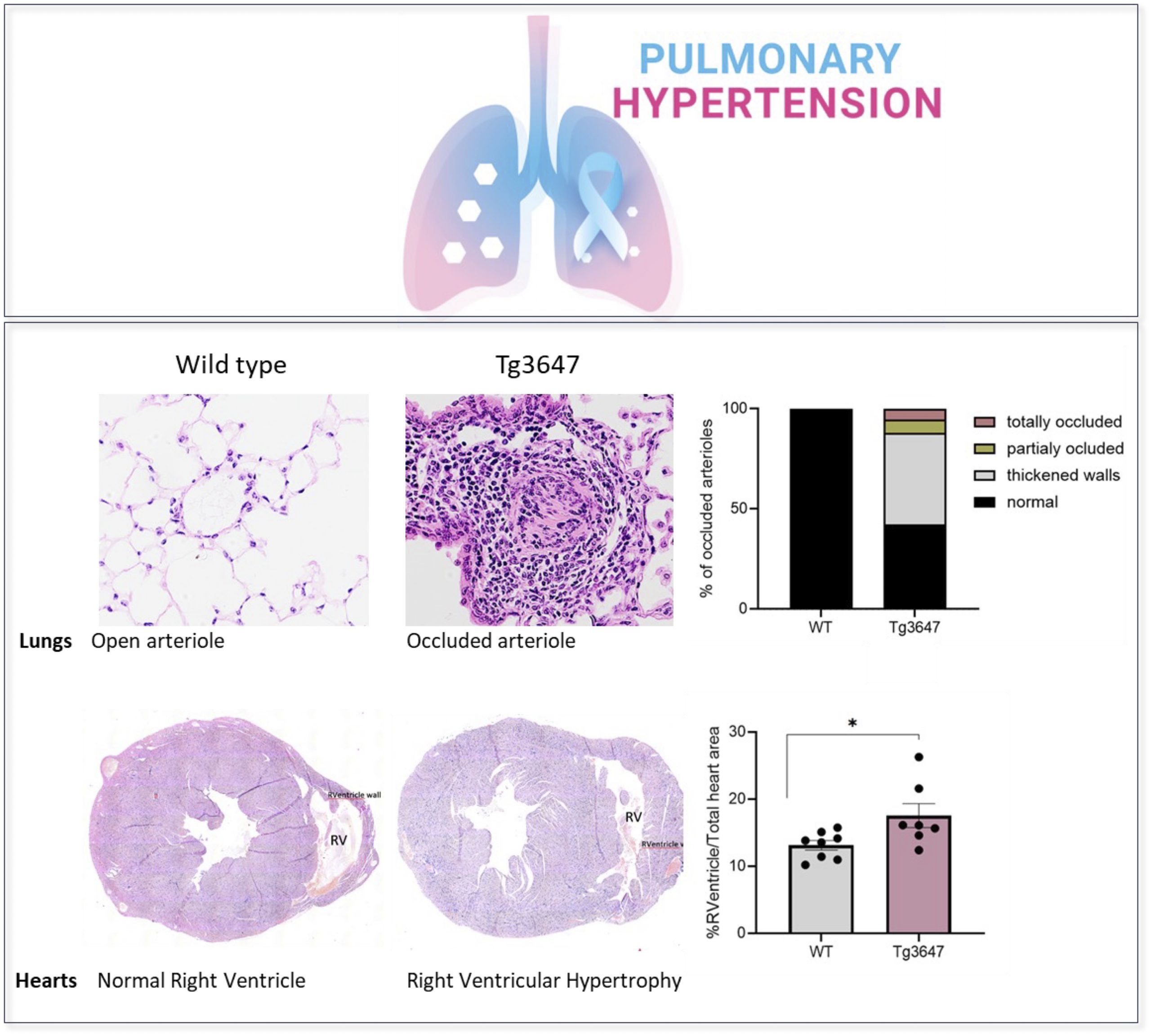
𝗣𝘂𝗹𝗺𝗼𝗻𝗮𝗿𝘆 𝗔𝗿𝘁𝗲𝗿𝗶𝗮𝗹 𝗛𝘆𝗽𝗲𝗿𝘁𝗲𝗻𝘀𝗶𝗼𝗻 (𝗣𝗔𝗛) is a serious condition where the blood vessels in the lungs become narrowed, blocked or damaged. This restricts blood flow and places additional burden on the heart,. Over time, this increased workload can weaken the heart, leading to declining respiratory and cardiovascular function, significantly impacting the quality of life and, in severe cases, can be life-threatening.
The 𝗧𝗴𝟯𝟲𝟰𝟳 𝗵𝘂𝗺𝗮𝗻 𝗧𝗡𝗙 𝘁𝗿𝗮𝗻𝘀𝗴𝗲𝗻𝗶𝗰 𝗺𝗼𝘂𝘀𝗲 𝗺𝗼𝗱𝗲𝗹, carries a human TNF transgene with modified 3ʹ‐UTR rendering posttranscriptional regulation inactive. It was originally developed for arthritis research, but apart from inflammatory polyarthritis, Tg3647 mice develop progressive interstitial lung pathology with pathological findings of arteriole occlusion and right ventricular hypertrophy closely mirroring the human condition of Pulmonary Arterial Hypertension (PAH).
Therefore the Tg3647 mouse model can be identified as a suitable model to support better understanding of mechanisms underlying arthritis related cardiopulmonary pathologies and the development of therapeutics targeting these pathologies.